
F$%K!!!! (Captain’s View) – January 13, 2023, Luperon, Dominican Republic
Ya I know not a great way to title a blog post, but there is not a better way to describe the last four day passage. After reading this adventure I would encourage you to come up with a title of your own and leave it in the comments.
So where do I begin? I guess let’s start from a few days out. We were currently sitting in Thompson Bay, Long Island waiting for a weather window to cross over to Puerto Rico. It is about a 600 mile non-stop trip, which requires you to have a long enough weather window to make east progress into the east blowing trade winds. There are only two times you get these types of windows, and they can be rather unpredictable. When a strong cold front blows off the southern states it tends to suck all the energy out of the atmosphere. At this time, you get light and variable winds which typically last a day or two. It is where the saying “calm before the storm” comes from.
The second instance (which is more useful) is when a series of strong cold fronts comes off the states, and it tends to back the winds and reverse them. This is the ticket we needed to get as far east as we could. The bad part about these fronts is as they move in, they tend to develop strong storms (squalls) as the fronts collide. The forecast was for backing winds and isolated squalls that would be pretty small. The footnote was for us to get as south and as east as fast as possible to reduce the risk of these storms. This is the setup of the plan, seems easy right? We thought so, however the plan was wrong, so very, very wrong.
Day one, as we exited GT and headed north around long island, we could already feel the forecast not being correct, we had more northerly winds then expected were hoping we could turn, and these winds would be welcoming since they would push us toward Puerto Rico.
4 hours later, after bashing into the wind and chop, we rounded the corner and the winds start to shift east, which is again on our nose (not as forecasted). So, more bashing, an update to the weather appears to show a weaking front coming, which could complicate this window. We pressed on because we had to make progress south. Day turns into night and both boats are running full sails beating into the wind as fast as we could. No squalls are predicted, and the radar was clear.
When the sun went down things changed and now we could see the menacing shadows of the strong storm clouds. It was time to reduce sail and in a hurry. Seconds later the first squall hit us and it was blowing 35 knot winds. Mariposa instantly stopped forward progress and the auto pilot starting showing errors, which were confusing at first. We had zero control of the boat. I was certain we lost our steering chain, so I pulled open the engine hatches to troubleshoot. Rudders moved so that was not the case, so I fired up the engines and used that thrust to point the boat into the wind so I could climb to the front of the boat to pull down the main sail. We must point into the wind for the main sail to drop, if not it just jams against the rigging and sticks. Sally at the wheel and me at the mast I start the impossible task of pulling down the main sail. As I release the halyard…nothing. The sail is jammed against the rigging and will not come down. Then in a blink of the eye, the wind shifts and the main comes down instantly spilling into the sail bag. The crisis was averted, and we quickly gain proper control of Mariposa again. Exhausted we motor into the rest of the night dodging squall after squall. In our 24-hour period we travel 128 miles, which puts us on time.
Day two does not really change much, bashing into the wind and waves we make progress as fast as we can, to attempt to make landfall in PR. With the shift in the wind to a more north easterly direction we have to drive ourselves more south to make progress. This in theory is a great decision, since it shortens our trip and gets us below the front and its squall potential…or so we thought. As the day wears on Sally and I do watch shifts, which are frequently interrupted by a squall that I should captain around. This was not ideal, but manageable since at any hour we will be south enough to out run the storms.
As the day two turns to black, we pull down our mainsail because we do not want another incident like we had last night, we can run the head sail alone and reef it from the cockpit with a little effort. Seems like a great plan as long as you keep up with the radar and watches. Well, around 11 pm, I am awakened to a warning of an imminent squall and an alarming increase in wind speed. I instantly jump to watch and in seconds have our head sail pulled in. It was a major effort, and we are lucky to have it tucked away before the full force of that squall hit.

Our buddy boat CD was not so lucky. As he reefed in his sail the reefing line snapped which left his sail slapping in the wind. This is the worst possible scenario since this requires you to manually pull down the sail from the front of the boat in the dead of the night, in a monster storm. Minutes seemed like days while his wife had to endure the stress of watching him struggle with pulling the sail down, while not getting drug into the ocean or injured. After what seemed like eternity the sail was safely pulled down, drug out of the ocean and secured to the deck for the night. As the captain returned to the cockpit of CD everyone breathed a sigh of relief of what had just happened and how lucky we were to have both boats and crew safe. The rest of the night was spent motoring into the unforgiving winds and waves. We prayed for the return of daylight so we could asses out situation and figure out plan B.
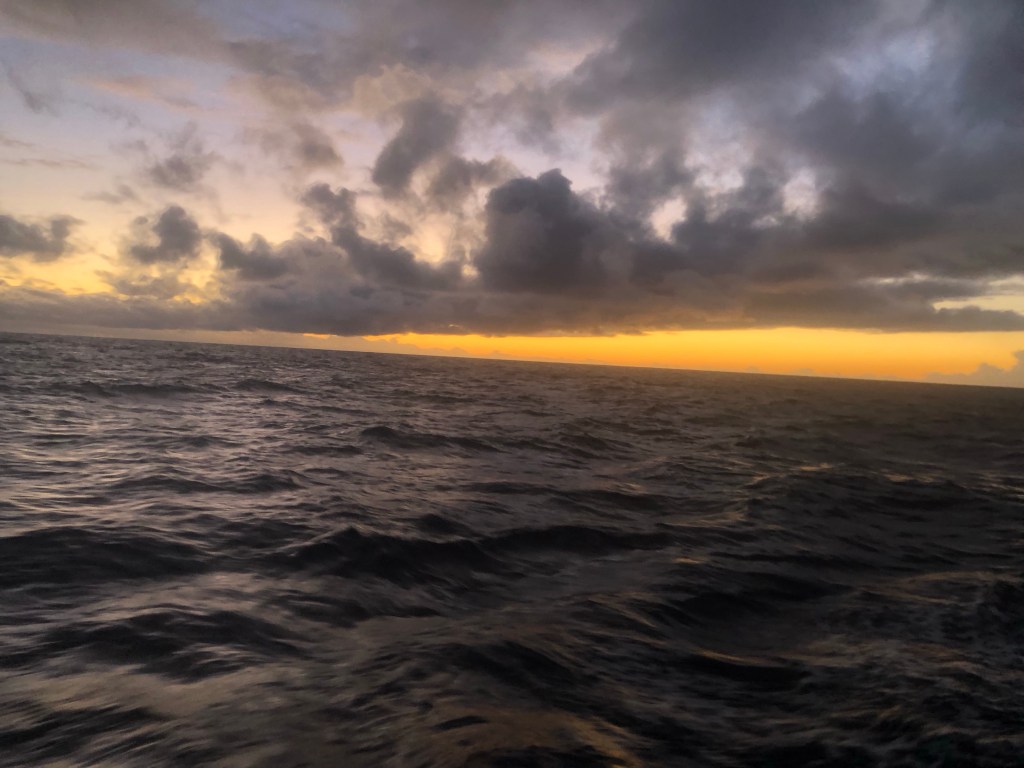
Day three started with clouds which would indicate that we were headed directly into the front we went south to avoid. To complicate matters, we are now in a section where the “Windy Radar” does not cover so we were flying blind with only the radar on our boat to detect the storm cells. Looking at our progress from day two, we managed a little over 100 miles of our required 130 miles to remain in a viable weather window to PR. With our buddy boat down a sail and not enough fuel to motor the required 2-3 additional days we had to come up with a plan B.
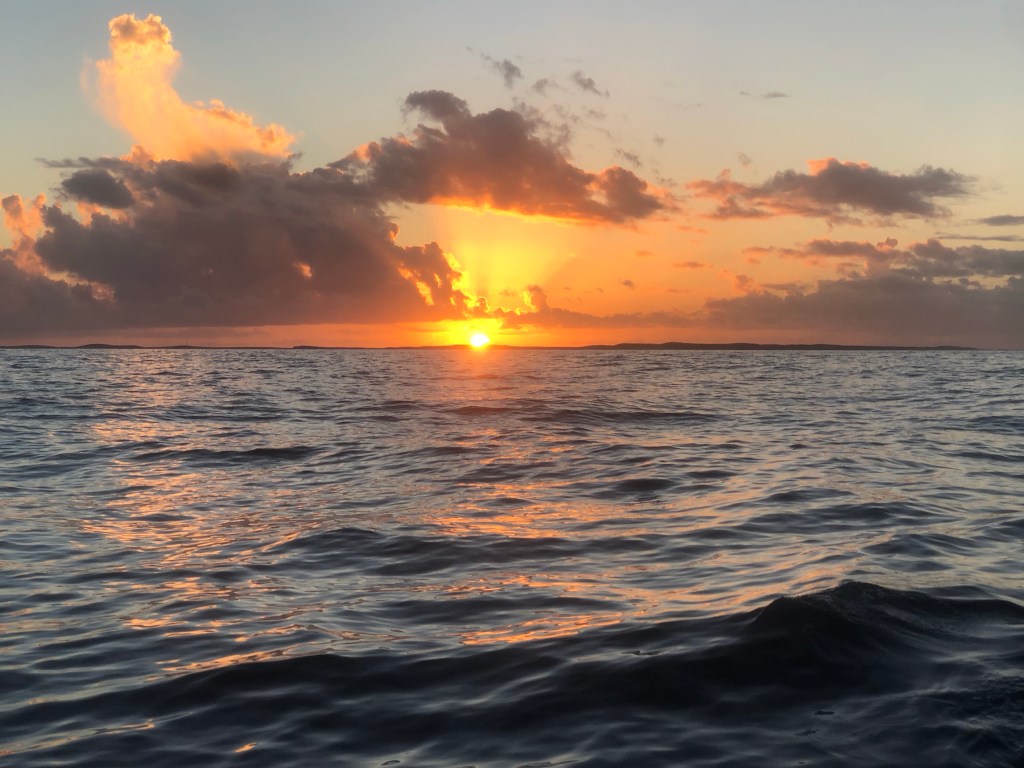
We went with going straight south to Luperon DR. It was straight south which would be a more comfortable sailing angle with the winds and waves, and was a mere 180 miles away from our location. Up until this point, our best day was 128 miles and we needed to do a bit better than that today. Bonus requirement was we had to reach Luperon before 9am, which is when the trade winds build, and making the passage even worse. Not sure how it could have been worse, we did not want to find out.
For the next 24 hours, we ran both engines full steam into the weather and counted down the miles. At dark came, we rounded the Turks and Caico Islands for our last stretch of ocean before Luperon. Hope started to rise knowing we were only 12 hours away from a safe place to anchor and allow for some much needed rest.
Learning from the lessons Neptune taught us the last two nights, we went into the last night with no sails and only motoring. Neither of us had enough energy to endure another sail induced drama so we went for the low key route. Little did we know the sail drama was replaced by cruise ship drama. Apparently there are several cruise ships that travel the same route we were on towards Luperon, so we spent the night, dodging squall after squall and cruise ship after cruise ship. We are the white one in the middle of these two green cruise ships.

It is an open empty ocean most of the time, until it is not, and then well it gets complicated. It was at around 2am when we had a close call with a cruise ship. I called out on the radio to make sure they saw us on AIS and got his intentions to pass green to green, which is suppose to be starboard to starboard. Easy, until I noticed that the navigation light on my boat was installed upside down and those lights were reversed! Now, if he looks to pass us green to green every move he made to stay away from us brought him closer, which would of been a disaster for us. Turning off the navigation lights and relying on the lights of our buddy boat was the only option at that point which worked. The rest of the night was spent enduring squall after squall and wave after wave watching the clock tick away.
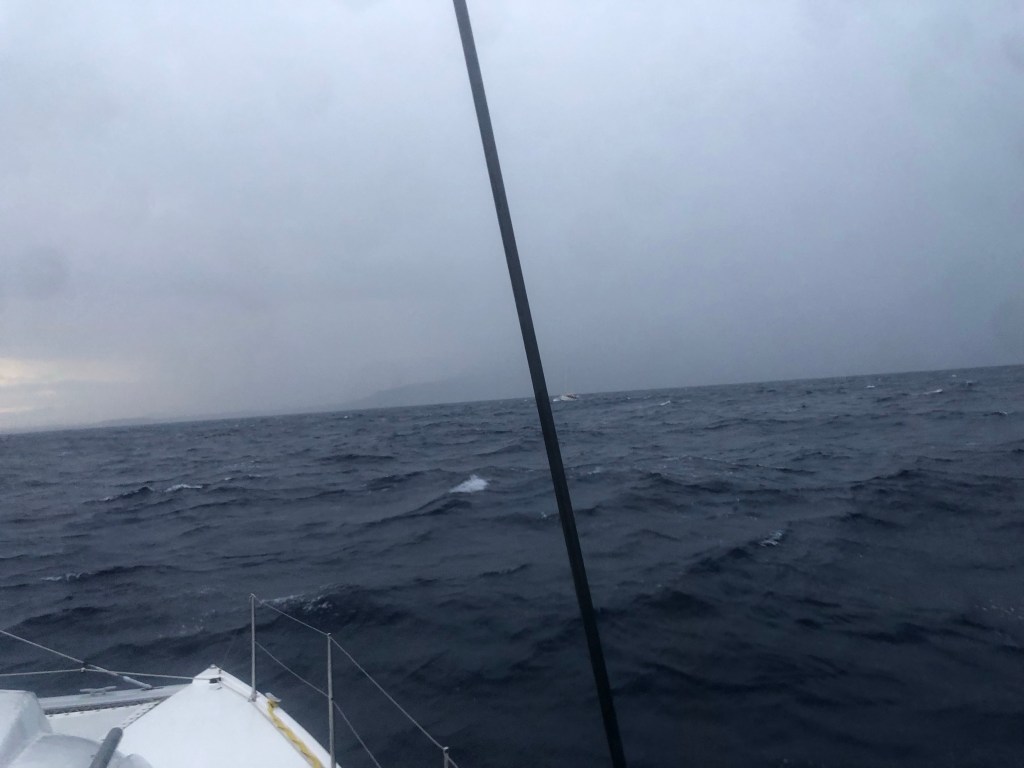
As morning came land was a welcoming sign, however the Luperon entrance was encased in the biggest squall we have encountered yet. It was like the final test of a three-day long exam. As we inched closer to the entrance the squall seemed to dissipate and allowed for an nondramatic entrance. safe at last.
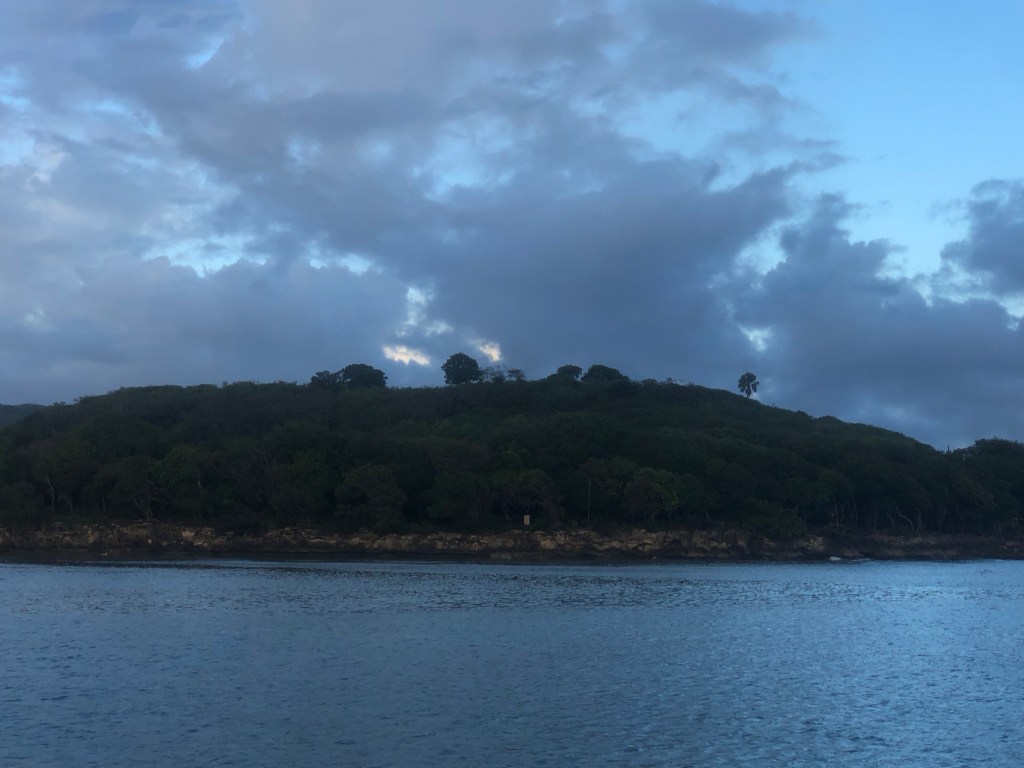
Overall, the trip took 73 hours and covered 408 miles. We made over 180 miles on the final push to get to safe harbor in Luperon and timed the entrance perfectly. Our watch schedule worked out pretty well and would have been perfect if the weather was not as adverse. I simply needed to be at the helm during these times and that made sleeping for me perhaps 5-8 hours over those three days. Sleep was hard to come by because you are bouncing around so much you must hold on, and when I slept in the cockpit to be close to the helm in the event of emergency, I was awakened by crashing waves over the stern of the boat making it into where I slept.
If we had to describe the living conditions on the boat during this passage it is best explained by imagining yourself riding the local circus scrambler ride alone. While you try to brace yourself from sliding from side to side in the dark while in a major thunderstorm with someone randomly throwing buckets of saltwater over you. All of this with the sound of roaring wind and random wave crashing sounds on volume 100. Sleep, normal conversation and just plain day to day life becomes a challenge due to the sensor overload. Once we set foot on land it took a day for our bodies to acclimate. It was very hard to walk and keep your balance.
The “thorny path” as they call it has earned its name in our eyes. We are, however, through the hardest part and hope for the remaining part of this passage to be less dramatic. We made it!

 Cement Donkeys